
Spring Home Projects on Billings’ West End: Renovation Storage Units, Billings, MT
ADMIN
December 27th, 2025
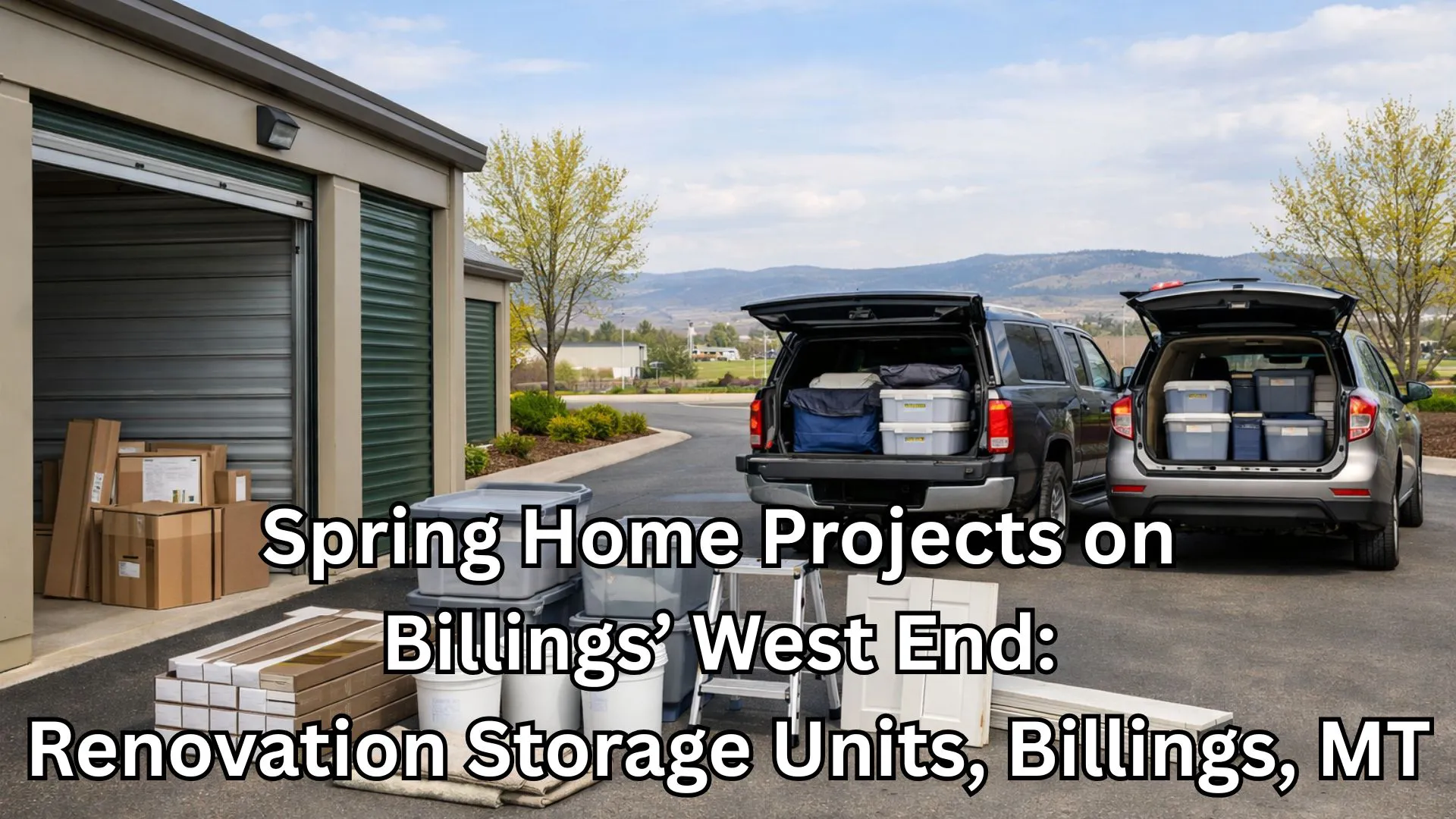
Spring is when a lot of West End projects finally get rolling. Paint. Flooring. A kitchen refresh. It adds up fast.
Here’s a myth we hear all the time: “We’ll just live around the mess.” That plan usually lasts about two days. Dust gets everywhere. Tools multiply. Boxes block hallways.
If your job is to keep the house usable while work is underway, a storage unit can be the pressure valve. Using renovation storage units, Billings, MT, renters can keep furniture protected, keep crews moving, and avoid the daily shuffle of piling things in the garage.
Bottom line: If you can’t close a door on it, store it.
How do you determine the optimal unit size and pack it efficiently to ensure your renovation stays on track?
Direct Answer: Start with the rooms you’re touching first, then plan for a buffer of items you’ll move twice if you don’t store them now. Measure bulky pieces, group items by when you’ll need them again, and choose a unit that lets you leave a clear aisle so you can reach essentials without unloading everything.
We like to think in phases, not square footage. Renovations change directions, and the last thing you want is a unit packed tight where the item you need is trapped behind a sofa.
A quick sizing approach:
- One room refresh (paint and trim): furniture, rugs, decor.
- Two room project (flooring plus hallway): add dining sets and bookcases.
- Main level churn (kitchen plus living): plan for multiple large pieces and boxed kitchenware.
Our size guide walks through common unit sizes and what typically fits, which helps you estimate without guessing.
Packing rules that save headaches:
- Leave an aisle. Always.
- Put “return first” items in front.
- Keep hardware together in labeled bags.
- Photograph cords before unplugging.
Short sentence, big impact: label all sides.
If your unit stays organized, your house stays calmer. You’ll know where things are. You’ll stop reboxing the same items. And you’ll move back in with less stress.
Quick recap: A unit you can navigate beats a unit you can’t.
Do you really need a storage unit during a remodel on Billings’ West End?
Direct Answer: You don’t need storage for every project, but you do need a plan for where your dust sensitive items will live. If you’re sanding, cutting, spraying, or pulling carpet, moving soft furniture and boxed essentials off site reduces damage risk and gives contractors safer, faster work areas inside your home.
Some homeowners try to stack everything in a spare bedroom. It works until it doesn’t. That room becomes a choke point. Doors won’t open. Someone steps on a lamp.
Temporary storage during home projects, which Billings renters often use, is less about “having more space” and more about keeping the project moving. When you can clear the work zone, you can protect furniture from dust, keep walkways open, and reduce the odds of a costly scratch or dent.
We also see a common week three problem: the project expands. A simple floor replacement becomes baseboards, then doors, then trim paint, and suddenly you’re living in a maze of boxes while trying to remember where the coffee maker went.
Short truth: Renovations don’t stay tidy.
What matters most: Storage buys you calm when the schedule shifts.
Drive-up vs indoor storage: which is better for a renovation in Billings, MT?
Direct Answer: Choose drive-up access when you’ll be moving heavy furniture, appliances, or boxed materials in and out during the project and want quick loading from your vehicle. Choose indoor storage when your main goal is keeping household items tucked away from the work zone so they’re handled less while your renovation runs its course.
We offer both drive-up access and indoor storage at our Billings West End location. That means you can match the unit type to how often you’ll be coming and going, which is the real decision most remodels hinge on.
Seasonal tip: In spring, keep a “mud zone” tote for boots and tarps. It keeps grit out of the rest of your boxes.
Insider loading tip: Load the heaviest pieces first, then build a stable wall with long, flat items like tabletops, and finish by filling gaps with soft bags so nothing shifts on the drive.
To make moving in and moving out smoother, we also provide dollies and handcarts. It’s a small thing. It saves backs.
Key takeaway: Pick the unit style that matches your touch frequency.
How We Help
Renovations run better when storage is close and easy to use. We’re located at 5221 King Ave W in Billings, MT 59106.
Here’s what renters lean on during remodel season:
- Drive-up access for big, heavy loads.
- Indoor storage for items you want out of the work zone.
- Dollies and handcarts to speed up loading and unloading.
- A fully fenced property and 24-hour digital video surveillance for added peace of mind.
When you’re ready, you can check availability here. If you’re still deciding, our size guide helps you choose.
Bottom line: A good storage plan protects the project.
Getting Started
You go through common unit sizes and what typically fits, helping before contractors arrive. It’s easier that way. Your home stays usable. Your crew stays productive.
Make a short list tonight: what must leave the house, what can stay, and what you’ll need access to each week. Then pack those “weekly need” items last so they land near the front of the unit.
Have questions about unit choice? Call us at (406) 998-8081. We’ll help you think through the layout so you’re not stuck moving the same furniture twice.
Quick recap: Store first, renovate second, breathe easier.
FAQs
How long should we keep a unit during a renovation?
Most remodels take longer than the calendar says. Plan for the full job plus a short buffer for punch list work and cleanup. If you finish early, move items back in a controlled way instead of rushing everything in one weekend. Keep the unit until floors are cured, paint is fully dry, and the dust has settled. That’s when furniture goes back safely, with fewer scratches and fewer re-dos overall. Plan your move back in room by room, slowly.
What should we NOT put into a unit while work is happening?
Avoid packing anything you’ll need daily. Also, keep important documents, medications, and anything temperature sensitive with you. For renovation storage, focus on furniture, rugs, decor, spare appliances, and boxed kitchen items. If something can’t be replaced easily, wrap it and store it toward the back so it isn’t handled repeatedly. Don’t store open liquids like paint or stain. Leaks are a mess, and cleanup wastes time. If you’re unsure, keep it at home until the project is done and cleaned.
What’s the best way to stage a unit so we can grab what we need?
Use a simple “front to back” system:
- Front: weekly use boxes, basic tools, drop cloths
- Middle: furniture you might reposition once
- Back: items you won’t touch until the end Label all sides. Leave a walkway. Stack by weight. Keep an inventory list on your phone so you stop opening random boxes just to find one cord. That habit saves time, and it keeps your project cleaner from start to finish. Snap a photo of each shelf row before you leave.
Can we mix renovation materials and household items in the same unit?
You can, but separate them. Put household items in boxes and cover soft furniture. Keep renovation materials like unopened flooring or trim on one side so grit and splinters don’t migrate. Store sharp tools in lidded bins. If you’re bringing items in and out often, keep that zone near the door so you don’t brush past upholstered pieces. A little separation now prevents a lot of cleaning later on. Use a tarp or divider so sawdust stays on its side.
Rimrock Mall: A handy West End landmark for orienting visitors, about 3 to 5 miles from our King Ave W location.
ZooMontana: Another familiar West End point, about 2 to 4 miles away, useful when you’re giving directions to helpers from out of town.
Categories